
Top Nail Gel Trends for Global Beauty Brands in 2026 are shaping up around a simple buyer reality: customers want faster salon-ready results, more visual impact, and finishes that photograph well from every angle. The market is no longer just asking for color. It is asking for wearability, a clean application story, and enough design range to keep a collection relevant across regions, seasons, and price tiers.
That matters because nail products now sit at the intersection of fashion, content, and retail velocity. A brand may launch a gel shade, but the sale often depends on how the finish looks under store lighting, in a salon portfolio, or on social media. For sourcing teams and product managers, the question is not only which shades are trending, but which trend directions can be translated into stable, repeatable product offerings.
What Is Driving The 2026 Nail Gel Market
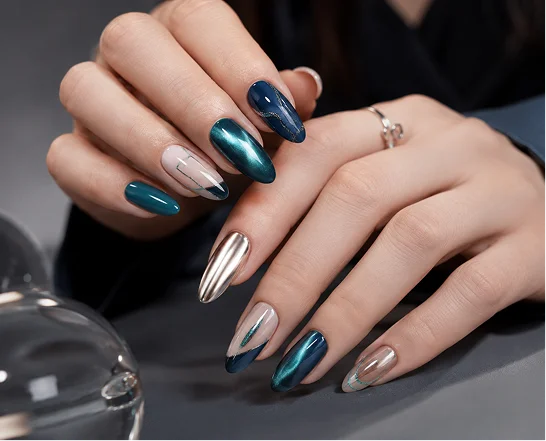
The strongest trend signal is not a single color. It is the move toward high-shine, high-contrast finishes that still feel polished rather than costume-like. Chrome effects, reflective accents, and layered color blocking are becoming more commercial because they deliver visual payoff without requiring complicated salon education. In practice, that means brands can sell a trend that looks editorial but can still be adapted for everyday wear.
The visual language in many 2026 collections leans into long almond and stiletto silhouettes, glossy surfaces, and metallic surfaces that catch light quickly. Teal, turquoise, navy, silver, and clear or nude bases are especially useful because they bridge cool-toned fashion stories with a broader seasonal palette. The result is a manicure that can look premium in a campaign and still feel accessible in a retail assortment.
Trend Directions Brands Should Watch
Chrome Is Moving From Accent To Center Stage
Chrome used to be a finishing touch. In 2026, it is often the point of the design. Buyers should expect demand for mirror-like surfaces, metallic gradients, and reflective details that sit on top of gel color rather than replacing it. This is especially relevant for salon displays and nail-art collections, where the visual punch has to be immediate.
That said, chrome is not the same as universal appeal. Some markets will want a softer shimmer, while others will embrace a harder mirror finish. Brands that build a collection with multiple intensities usually have better coverage than those relying on a single “metallic” SKU.
Cool Tones Are Staying Strong
Teal, turquoise, navy, and silver keep showing up because they work well with both futuristic and luxury cues. They also pair naturally with nude or clear bases, which help balance stronger tones and make the overall design easier to wear. For global brands, this is useful: the same color family can be framed as summer resort, winter metallic, or evening fashion depending on the campaign.
Long Almond Shapes Still Carry Commercial Weight
The elongated almond and pointed stiletto look remains influential because it gives more surface area for layered color and reflective detail. From a product standpoint, that matters. More visible surface means the design language is easier to read in photos, and that improves the value of the collection as a marketing asset. The caution, of course, is that not every customer wants the length shown in editorial imagery. Brands should consider pairing statement shapes with shorter retail-friendly alternatives so the trend story does not feel too narrowly salon-driven.
What The Design Language In The Market Is Telling Us
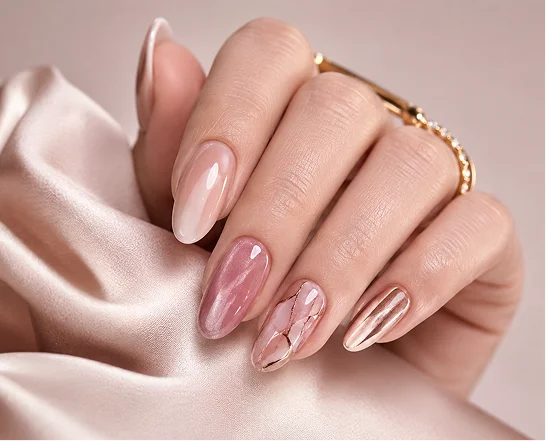
One useful clue from recent visual examples is the appeal of coordinated multi-nail sets. When several nails share a theme but differ in tone, opacity, or metallic treatment, the result feels curated instead of repetitive. That is a helpful direction for brands building press-on assortments, salon display boards, or social content. It also gives designers room to create a collection story without relying on one dominant motif.
Another practical takeaway is the growing interest in smooth, high-shine surfaces rather than heavily textured effects. That does not mean texture is gone. It means the market is rewarding clarity: clean color blocking, polished gradients, and sharp transitions between chrome and nude. These are visually legible ideas, and legibility sells.
How Global Brands Can Choose The Right Product Direction
The main decision is whether the collection is built for salon artistry, retail convenience, or a hybrid of both. Each path asks for different product priorities. Salon-facing lines can tolerate more dramatic finishes and more complicated application stories. Retail-facing lines need predictable packaging, clear usage messaging, and a design that can be understood instantly on shelf.
- Choose reflective chrome accents if the collection needs strong shelf impact.
- Use nude or clear bases when you want to soften bold tones for broader wear.
- Include both glossy solids and gradient treatments if the line needs visual range.
- Reserve pointed almond shapes for editorial and display assets, then test shorter shapes for mass appeal.
For brands that work across regions, the safer strategy is usually modular. Build one trend theme, then express it in several levels of intensity. That way the same core idea can support a premium salon launch in one market and a more restrained retail set in another.
Common Mistakes Buyers Still Make
The first mistake is assuming a strong visual trend will automatically translate into a strong SKU. A manicure can look striking in a photo and still be difficult to merchandise if the finish is too niche or the color story is too narrow. The second mistake is overloading a collection with too many effects at once. Chrome, gradient, glitter, and heavy embellishment can fight each other. The result may feel busy instead of premium.
Another frequent issue is ignoring application consistency. Whether a brand is working with gel polish, chrome powder, or a press-on-style product, the customer experience has to feel repeatable. If the finish only looks good under perfect conditions, the trend story will weaken quickly in real-world use.
Practical Advice For Sourcing And Product Teams
When reviewing samples, ask how the trend reads at arm’s length, not just in close-up photography. Many nail looks impress on a bench and flatten once they move into packaging or retail lighting. Also check whether the design still looks coherent when viewed as a set. The coordinated finger-by-finger story matters more than one standout nail.
It is also worth paying attention to finish stability in visual terms. Even if a supplier does not provide exact wear-time claims, brands should still look for a surface that appears evenly cured, smooth at the edges, and consistent across shades. A collection built around metallic sheen has very little margin for sloppy surface quality; flaws show immediately.
For product planning, 2026 is a good year to separate “trend” from “theme.” Trend is the reflective surface, the cool-toned palette, the elongated silhouette. Theme is how you package that idea for a customer segment. A premium line may frame it as futuristic evening wear. A mass line may frame it as easy salon glamour. Same design language, different commercial entry point.
FAQ For Buyers And Brand Teams
Is chrome still relevant in 2026?
Yes, but it is evolving. Pure mirror effects remain useful, yet many collections now combine chrome with color blocking, gradients, or transparent bases to feel less one-note.
Which colors are safest for a global launch?
Cool shades like teal, turquoise, navy, and silver are strong candidates because they can be styled in multiple ways. Nude and clear bases help keep the collection approachable across markets.
Should every trend collection use long nails?
No. Long almond and pointed shapes create strong visuals, but they work best when supported by shorter or more wearable options. That gives buyers more room to merchandise the trend without narrowing the audience.
What should brands avoid?
Avoid designs that depend entirely on a single social media look. If the product only works in a very specific pose, light, or angle, it will be harder to sell through at retail.
Next Step For Global Beauty Brands
For 2026 planning, the smartest move is to build nail gel collections around finishes that deliver immediate visual value: chrome accents, glossy layers, cool-toned color stories, and elegant elongated shapes. The market still rewards novelty, but it now expects that novelty to be merchandisable. That is where the real opportunity sits for beauty brands, salon partners, and private-label teams: not just following a look, but turning it into a collection that customers can understand, wear, and buy.
If your team is mapping next season’s assortment, start with one core trend story and test how it performs across shades, shapes, and application formats. The best launches in this category usually are not the loudest. They are the ones that look fresh, travel well across markets, and give buyers enough flexibility to actually place the order.