
What Should a Private Label Gel Polish Manufacturer Actually Provide?
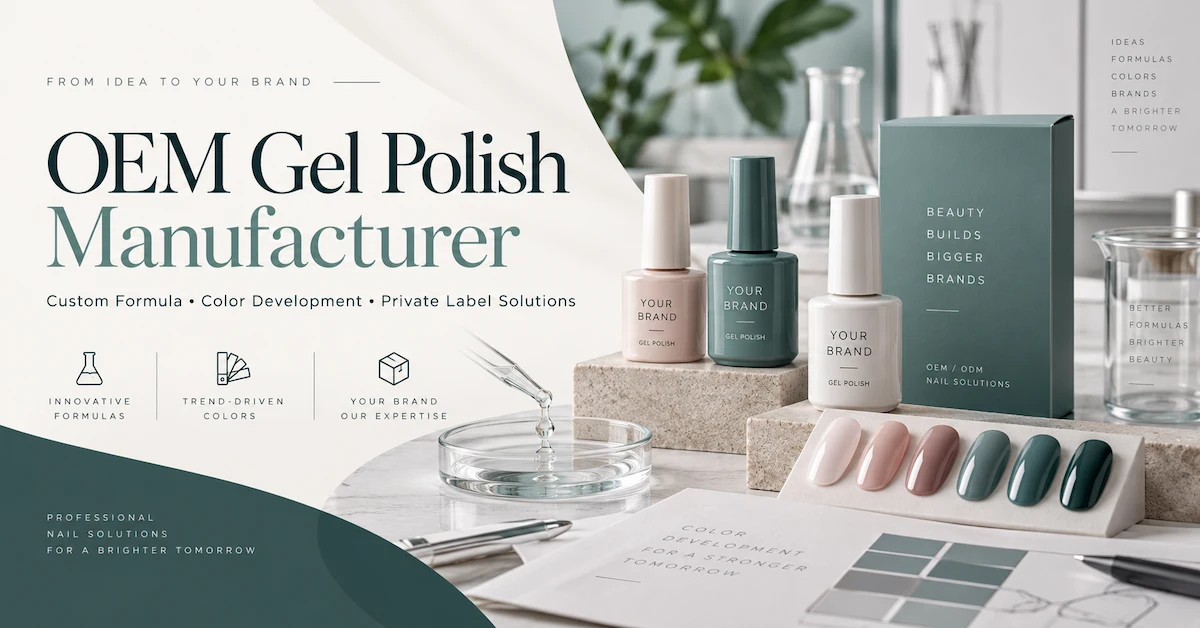
A private label gel polish manufacturer should do more than place a customer’s logo on an existing bottle. For a serious nail brand, the manufacturing relationship can involve formula selection, color development, viscosity and finish requirements, bottle and brush selection, label artwork, outer packaging, sample approval, production control, documentation, and repeat-order management.
The key question is how much customization your project really needs. Some brands can launch efficiently by selecting an existing formula and adding their own packaging. Others need exclusive shades, different viscosity, specific finishes, or a more differentiated product system. JOUS presents its OEM/ODM and private label service around formula customization, color matching, bottle design, labeling, packaging, and production support.
That distinction matters because “private label” is not one fixed manufacturing model. The development time, MOQ, sample process, cost structure, and technical risk can change depending on whether you are simply branding an existing formula or creating a substantially customized collection.
Who Is Private Label Gel Polish Manufacturing Best For?
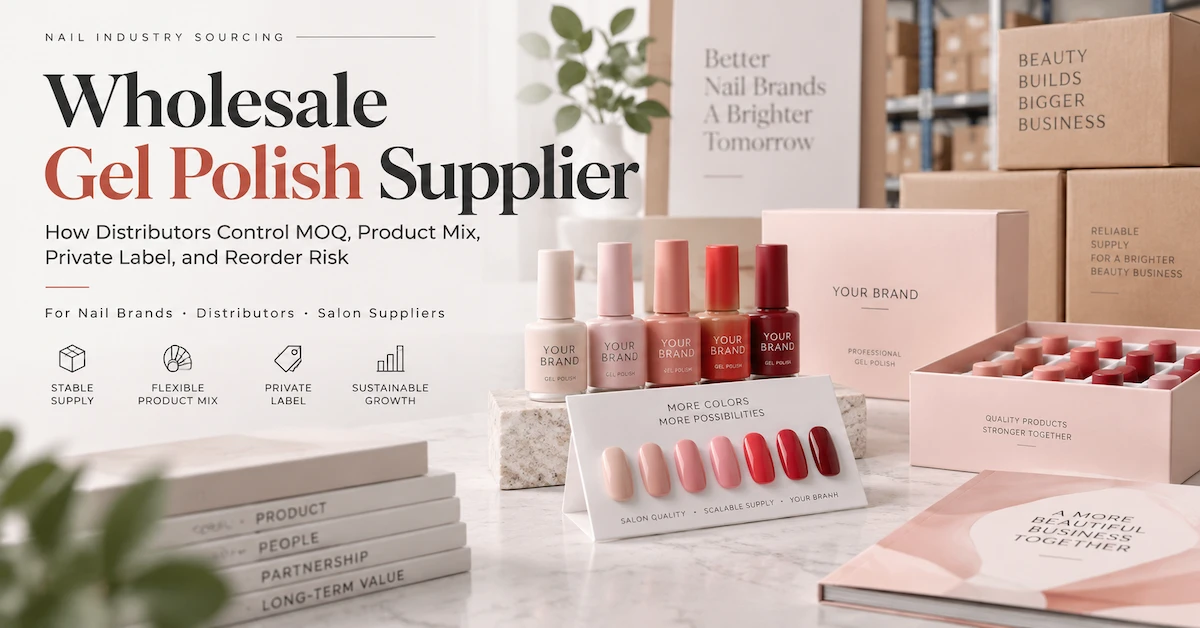
Private label manufacturing is particularly relevant for nail brands that want to build their own identity without developing every manufacturing capability internally. It can also suit beauty distributors expanding into proprietary products, salon chains creating exclusive retail collections, e-commerce brands building differentiated nail lines, and wholesalers that want a branded range rather than selling generic products.
A private label project is usually most effective when the buyer already has a clear idea of the target customer, market position, sales channel, product category, and approximate launch volume. A brand selling professional salon products may prioritize application control, bottle size, brush design, and repeat-order consistency. An online beauty brand may place greater emphasis on color stories, packaging presentation, SKU planning, and rapid collection updates.
Private label manufacturing is less useful when the project has no defined target market, product concept, required quantity, or packaging direction. In that case, the first step should be to study the available JOUS nail gel product range and determine which categories fit the planned collection before requesting extensive customization. JOUS currently lists color gels, cat eye gels, builder systems, base and top products, extension gels, functional gels, press-on nail gels, blooming gels, and other product groups.
Start With a Private Label Product Brief, Not Just a Logo
One of the most common sourcing mistakes is sending a logo and asking, “How much for private label gel polish?” That question leaves too many variables undefined.
A stronger inquiry gives the manufacturer enough information to determine whether the project should use an existing formula, custom color work, formula adjustment, or a more complete ODM route.
| Project Item | What the Buyer Should Define | Why It Matters |
|---|---|---|
| Target market | Country or sales region | Influences product documentation and labeling requirements |
| Buyer type | Salon, retail, e-commerce, distributor | Helps define product and packaging direction |
| Product type | Color gel, base, top, builder, cat eye, etc. | Determines development route |
| Formula route | Existing or customized | Changes sampling and development work |
| Color plan | Existing shades or custom palette | Affects sample approval and SKU complexity |
| Performance | Viscosity, finish, cure behavior, wear expectations | Defines what must be evaluated |
| Bottle size | Required retail format | Affects packaging and pricing |
| Packaging | Stock bottle or custom bottle/box | Changes MOQ and development scope |
| Branding | Logo, label, box artwork | Must be approved before production |
| Quantity | Sample, first order, forecast volume | Supports commercial planning |
| Launch schedule | Desired market date | Helps build a realistic project timeline |
This document does not need to be complicated. Its purpose is to prevent different teams from working with different assumptions. Purchasing, brand design, product development, and the manufacturer should all be referring to the same approved project definition.
Formula Customization Should Be Defined by Performance Requirements
Many brands ask for a “better formula,” but that phrase is too vague to guide product development. A custom gel project should translate the desired user experience into specific characteristics that can be evaluated during sampling.
JOUS states that its OEM/ODM service can address formula and performance factors including viscosity, cure time, wearability, and finish.
For buyers, this means discussing practical questions such as:
- Should the gel be thinner or more controlled during application?
- Is the product intended for color coating, reinforcement, structure building, extension, or nail art?
- What finish is required?
- What cure instructions will be supplied with the finished product?
- Is a particular formula claim required for the target collection?
- Does the buyer need an existing formula or a separately developed version?
A private label gel polish manufacturer should be able to separate a marketing request from a technical requirement. “Professional quality,” “long-lasting,” and “high gloss” are useful commercial descriptions, but they do not replace an approved sample and defined product specification.
Buyers interested in the available product platforms can review the JOUS Color Gel Polish collection before deciding whether an existing system can support the project or whether additional development is justified.
How Should Nail Brands Approach Color Development?
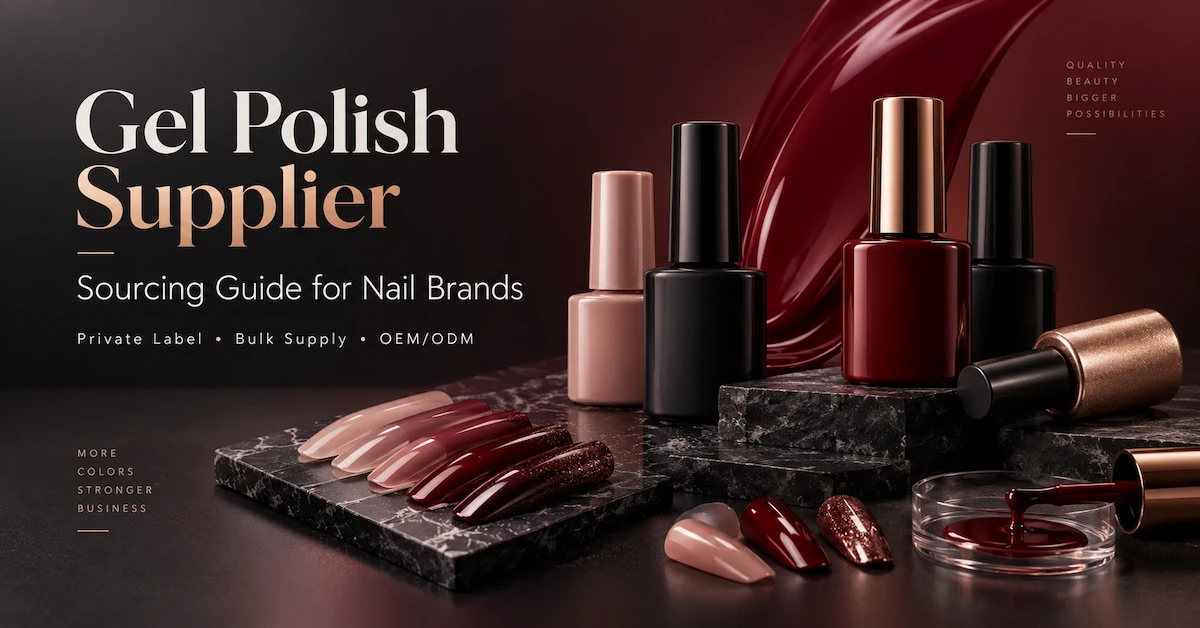
Color is one of the most visible parts of a gel polish brand, but it also creates significant SKU complexity. A 12-color launch and a 100-color catalog require very different inventory, sample approval, packaging, and replenishment strategies.
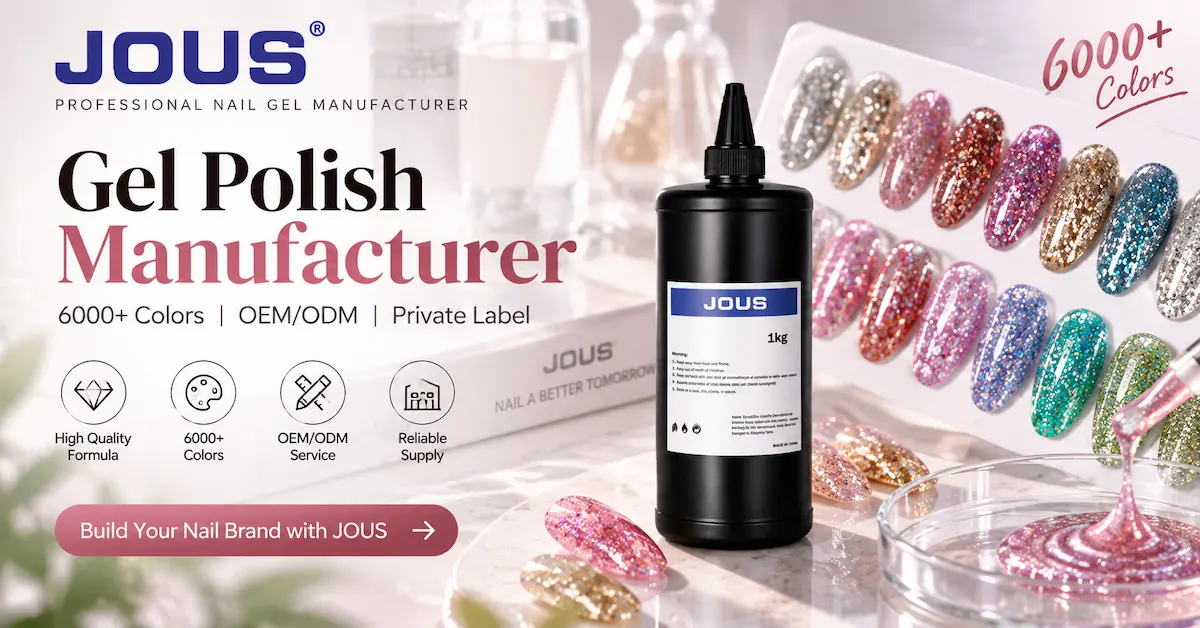
JOUS publishes a Color Gel Polish category identified as “6,000+ Colors,” while its OEM/ODM page separately refers to more than 1,600 custom color development options. These figures appear to describe different scopes, so buyers should confirm which palette, color library, or custom-development route applies to the specific project rather than treating the numbers as identical metrics.
For a first private label collection, the more important issue is not selecting the largest possible number of shades. It is creating a manageable range that fits the brand’s customers and sales channel.
A useful color approval process can include the selected shade code, sample version, visual reference, finish, number of coats used for evaluation, and final approval status. When a shade is revised, the project should distinguish the new sample from the previous version instead of referring to both simply as “the approved pink.”
Brands considering a large color program can also review the specific JOUS 6000+ Colours private label gel polish product as a reference point for available OEM-oriented color products.
Packaging Is Part of the Product, Not an Afterthought
For private label gel polish, the formula and the packaging must work as one commercial product. Bottle appearance matters, but so do the cap, brush, label area, filling volume, outer box, and how the complete package performs during storage, shipping, retail display, and salon use.
JOUS states that its private label service includes bottles, caps, labels, boxes, and custom packaging options. Its OEM/ODM page also describes stock designs and custom molds as possible packaging routes.
Before approving packaging, buyers should confirm:
- Bottle capacity and fill requirement
- Bottle color and finish
- Cap design
- Brush configuration
- Logo placement
- Label size and artwork
- Outer box structure
- Barcode or buyer-specific product coding
- Batch identification requirements
- Shipping carton requirements
Packaging customization can also affect MOQ. A stock bottle with a customized label is a different project from a completely new bottle mold. Buyers should therefore separate product MOQ, printing MOQ, and custom packaging MOQ rather than asking for one universal minimum.
Existing Formula, Custom Formula, or Bulk Gel: Which Route Fits Your Brand?
Not every private label project requires the same level of development.
| Supply Route | Typical Scope | Main Advantage | Buyer Should Confirm |
|---|---|---|---|
| Existing formula + private label | Existing gel, custom logo and packaging | Faster project setup | Formula suitability, packaging MOQ, sample approval |
| Existing formula + custom colors | Proven platform with dedicated shades | More brand differentiation | Color approval, repeat-order shade control |
| Customized formula + packaging | Formula/performance plus branding | Highest customization potential | Development scope, testing, MOQ, timeline |
| Bulk gel supply | Bulk gel for buyer/local filler | Flexible local packaging | Bulk specification, filling compatibility, batch control |
For businesses that already operate local filling or packaging, purchasing finished retail bottles may not always be the preferred route. JOUS also offers bulk nail gel supply for brands, fillers, and distributors. The bulk service page describes formula selection, specification confirmation, sample approval, bulk production, and reorder as separate steps.
The correct route depends on the buyer’s supply chain. A company with no local filling capability may benefit from finished private label bottles, while a large regional brand with its own packaging operation may prefer bulk gel.
Sample Approval Should Control the Product You Actually Order
A private label sample is more than a free test item. Once the buyer intends to scale into commercial production, the sample should represent a defined version of the product.
Useful sample records can include:
- Product or formula reference
- Shade number
- Sample date or revision
- Viscosity or texture description
- Finish
- Application observations
- Cure instructions supplied by the manufacturer
- Packaging used during evaluation
- Required changes
- Final approval status
The published FAQ on JOUS’s 6000+ color gel polish product states that buyers can request up to 10 different free samples, with shipping paid by the customer, and lists an example sample lead time of 3–7 days after confirmation. These terms are published for that product page and should not automatically be treated as universal conditions for every custom project.
That distinction is important. A standard sample selected from an existing range is not the same as a newly developed custom formula or exclusive color. A professional sourcing process should confirm which type of sample is being requested before assuming the same lead time applies.
How Should Buyers Evaluate Quality Control?
Quality control should be evaluated across the production process rather than only by looking at a finished bottle.
JOUS describes its manufacturing operation as including independent R&D and formula design and states that it uses a Class 100,000 constant-temperature dust-free clean workshop. Its OEM/ODM page also refers to multi-point QC and batch consistency.
For a private label buyer, practical quality questions include:
- How is the approved formula identified?
- How is the approved shade referenced for repeat production?
- What checks occur before filling?
- What finished-product checks apply to the selected product?
- How are packaging errors detected?
- How are changes to formula or packaging communicated?
- What documentation can be supplied with the specific order?
The individual 6000+ color product FAQ states that its QC process covers raw-material inspection, in-process checks, and final inspection before shipment. Again, this is useful published information, but the buyer should confirm the exact inspection plan for the formula and private label configuration actually being ordered.
Certifications and Compliance Should Be Verified by Scope
JOUS’s About page lists ISO, GMPC, and SGS-related credentials, while its OEM/ODM page describes ISO/GMPC-aligned production standards and documentation support for target markets.
For procurement purposes, seeing a certification name on a company page should be the beginning of verification, not the end. Buyers should ask which company entity, factory, process, formula, report, or product the document covers and whether it applies to the destination market.
This is particularly important when a brand requests specific ingredient-related claims or market-specific labeling. A claim shown on one formula should not automatically be transferred to every product in the catalog.
JOUS also has a dedicated category for certain formula variants within its gel polish product catalog, allowing buyers to identify relevant products before requesting project-specific documents.
What Should Buyers Know About MOQ and Production Lead Time?
There is rarely one correct MOQ for every private label order because MOQ can depend on formula, color, bottle, printing, outer packaging, and the amount of customization required.
JOUS’s OEM/ODM page describes low-MOQ options but does not publish one universal minimum for every project. A specific 6000+ color product FAQ separately lists a standard MOQ of 500 pieces per order and notes that terms for new partners may be discussed. The same product page publishes an example mass-production lead time of 10–20 days after sample confirmation and deposit payment.
These figures should therefore be treated as published conditions for a specific product context, not as guaranteed terms for every custom private label program.
When requesting a quotation, ask the manufacturer to separate:
Standard product MOQ: quantity for an existing formula and standard packaging.
Color customization MOQ: quantity required for dedicated shades.
Printing MOQ: minimum for labels or decorated bottles.
Custom packaging MOQ: quantity for custom bottles, caps, or boxes.
Production lead time: when the clock starts and which buyer approvals must be completed first.
This makes quotations easier to compare and reduces surprises later in the project.
Private Label Gel Polish Cost Is More Than the Bottle Price
When buyers compare a private label gel polish manufacturer, focusing only on the finished unit price can hide important project costs.
The total sourcing cost can include formula development, custom color sampling, packaging samples, bottle decoration, labels, boxes, freight, documentation, unsold inventory, and future changes to the product.
A low price becomes less attractive if the project requires multiple sample revisions because the brief was unclear, or if custom packaging creates an MOQ far above realistic sales volume.
For a first launch, a simpler configuration may sometimes provide better commercial control. Once sales data is available, the brand can then move into more exclusive colors, formulas, or packaging.
The most useful quotation is therefore not necessarily the lowest quotation. It is the quotation that clearly identifies what is included, what remains optional, what requires approval, and which changes would affect price or lead time.
A Practical Private Label Gel Polish Development Workflow
A structured project can follow this sequence:
1. Define the market and product concept.
Identify the target customer, channel, price position, and initial product categories.
2. Select the manufacturing route.
Choose between existing formulas, custom colors, formula development, finished private label products, or bulk supply.
3. Build the specification.
Record product type, performance expectations, color direction, bottle size, packaging, and documentation needs.
4. Request and evaluate samples.
Keep samples identified by shade, formula, and revision.
5. Finalize packaging.
Approve bottle, cap, brush, label, artwork, and box.
6. Confirm commercial terms.
Review MOQ, price, payment terms, development costs, production timing, and logistics.
7. Approve the final production version.
Make sure the product being manufactured matches the approved formula, shade, and packaging.
8. Plan the reorder process.
Keep product references and approval records so future batches can be connected to the same specification.
This type of structured development process is more reliable than managing a project through disconnected messages, photos, and verbal approvals.
What Should You Send a Private Label Gel Polish Manufacturer for a Quote?
A useful sourcing request should contain enough information for the supplier to evaluate the project instead of guessing.
Send:
- Target country or market
- Buyer type and sales channel
- Product category
- Existing or custom formula requirement
- Required colors or approximate SKU count
- Preferred bottle size
- Packaging concept
- Logo/artwork status
- Estimated first-order quantity
- Expected future volume if known
- Target launch schedule
- Required documents or formula claims
- Whether you need finished bottles or bulk gel
Buyers can first review the JOUS product catalog and available categories, then submit the final project brief through JOUS Contact Us for a more relevant quotation and sample plan.
Frequently Asked Questions
1. What does a private label gel polish manufacturer do?
A private label manufacturer produces gel products that are sold under the buyer’s own brand. Depending on the project, this may include existing formulas, custom colors, formula adjustments, bottles, labels, boxes, filling, and production support.
2. What is the difference between private label and OEM gel polish?
The terms often overlap in commercial use. Private label commonly starts with an existing manufacturing platform that is branded for the buyer, while deeper OEM/ODM projects may include more extensive formula, color, performance, or packaging development. The actual responsibilities should be defined in the project specification.
3. Can JOUS customize gel polish formulas?
JOUS states that its OEM/ODM service supports formula development and adjustment of characteristics such as viscosity, cure time, wearability, and finish. The exact scope should be confirmed for the selected product and target market.
4. Can I develop exclusive gel polish colors?
JOUS states that it supports color development, trend shade adaptation, and exclusive palette work. Buyers should establish a clear sample approval method so the selected color can be referenced during production and reorders.
5. What is the MOQ for private label gel polish?
There is no single MOQ published for every JOUS private label configuration. The OEM/ODM page refers to low-MOQ options, while one specific 6000+ color product FAQ lists a standard MOQ of 500 pieces per order. Formula, color, bottle, and packaging requirements can change the applicable MOQ.
6. How long does a private label gel polish order take?
A specific JOUS product FAQ publishes 3–7 days for sample lead time and 10–20 days for mass production after sample confirmation and deposit. Custom formula or packaging projects may require different timelines, so buyers should obtain a project-specific schedule.
7. Can I order bulk gel instead of finished bottles?
Yes. JOUS has a dedicated bulk gel supply service for brands, fillers, and distributors that want to manage filling or packaging through their own supply chain.
8. What should I check before approving a gel polish sample?
Confirm the product/formula reference, shade, finish, application behavior, cure instructions, packaging compatibility, and any agreed performance requirements. Keep the approved version clearly identified for production reference.
9. Should I choose the supplier offering the lowest unit price?
Not necessarily. Compare formula scope, sample work, packaging, MOQ, quality controls, documentation, production timing, and repeat-order management. A slightly lower bottle price can be outweighed by higher inventory or development risk.
10. How do I start a private label project with JOUS?
Review the available JOUS products and OEM/ODM capabilities, then prepare your target market, product type, colors, packaging, quantities, and customization requirements. Submit these details through JOUS Contact Us so the appropriate product, sample, and manufacturing route can be evaluated.
Conclusion
Choosing a private label gel polish manufacturer is ultimately a product-development and supply-chain decision, not just a search for a bottle with your logo. Nail brands should evaluate the manufacturer’s ability to support the right formula, develop or match colors, coordinate packaging, control approved samples, manage production quality, clarify MOQ, and maintain repeatable supply after the first order.
The safest private label project starts with a clear specification and separates what is standard from what is genuinely customized. Buyers should confirm formula version, shade, bottle, label, box, sample approval, documentation, production terms, and reorder references before releasing bulk production.
JOUS combines nail gel manufacturing with formula, color, packaging, OEM/ODM, and bulk supply options for brands with different sourcing models. Buyers preparing a new collection can explore the JOUS OEM/ODM service, compare the available nail gel products, and then contact JOUS with the target market, product type, quantity, color plan, formula requirements, and packaging needs for a project-specific evaluation.